





Always Visit www.NaijaCover.Com
Posted By Admin On May 27th, 2026
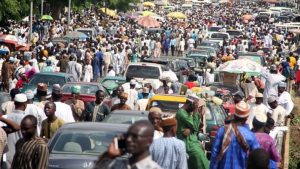

Nigerians are once again faced with hardship as they mark the 2026 Eid el-Kabir (Sallah) amid significant economic difficulty, orchestrated by continuous inflation, surging costs of livestock, and spiking transportation fares.
Many families are adjusting their celebrations to manage the financial strain with food inflation and overall living costs biting harder.

This is as Nigeria’s inflation rate has increased with average Nigerians bearing the brunt.
According to the latest Consumer Price Index, CPI, released by the National Bureau of Statistics, NBS, Nigeria’s headline inflation now stands at 15.69 per cent as of April 2026.
DAILY POST reports that the traditional purchase of rams has become a major financial hurdle with premium rams going for as high as N750,000 to over N1.5 million.
Many households are abandoning the purchase of rams entirely, instead opting to pool resources to buy cows or turning to more affordable alternatives like fish.
Checks by DAILY POST at the Mararaba market, an outskirt of the Federal Capital Territory, FCT, Abuja domiciled in Nasarawa State, revealed that medium-sized rams that were sold for between N200,000 and N300,000 last year now go for as much as N500,000, while larger breeds exceed N800,000 or more.
Surveying food items in the same market, DAILY POST found that items such as rice, tomatoes, onions, pepper, and vegetable oil have also recorded sharp increases, causing many households to either reduce their celebration plans or seek cheaper alternatives.
Similarly, traders lament declining patronage as customers now spend more time bargaining or simply leave markets without buying.
Butchers, poultry sellers, transporters, and foodstuff dealers all describe a business environment weighed down by rising operational costs and shrinking consumer purchasing power.
Speaking to DAILY POST at the same area, a ram seller, Yusuf Ahmed, said he was worried about the significant spike in animal feed costs, which according to him has affected ram and cow prices in the market.
According to him, goats now start at approximately N150,000, depending on size and breed, adding that sales this year are disappointing compared to previous years, with many potential buyers delaying their purchases or opting for smaller animals due to economic hardship.
“The price of food for rams and cows has risen too much; that is why prices are high. The sales are not as good as before or last year. People are not buying like they used to,” he said.
Another ram seller, Mustapha Ali, lamented a significant slowdown in business, expressing hope for increased patronage as Sallah approaches.
“What I have noticed is that people come to the market to inquire about ram prices and then leave. Last year, there was a noticeable rush of customers at this time, but this year, people are overwhelmed by the prices,” he added.
At Nyanya market, DAILY POST gathered that live chickens that were sold for between N12,000 and N18,000 last year are now priced between N25,000 and N40,000, depending on their size.
Speaking to our correspondent, a chicken seller, Mr Mohammed Nuhu said traders are often blamed by customers for the price increase, even though they are also affected by the current economic situation.
According to him, the costs of poultry feed, transportation, and maintenance had all risen, making it difficult for sellers to lower prices despite complaints from customers.
He also added that many families who can no longer afford rams were now turning to chickens as an alternative for the Ileya celebration, lamenting that even chicken prices have become unaffordable for some households.
“The sales are low, and it’s not our fault. The price is high, and it’s not our fault.
“We are even having low patronage because unlike last year, people are not trooping into the market to buy them from us. Things are just getting worse in Nigeria,” he said.
Touring the staple food items section of the market, DAILY POST reports that their prices have significantly increased in anticipation of the celebration, with traders confirming spikes in the prices of rice, tomatoes, onions, pepper, and vegetable oil.
A bag of pepper has risen sharply due to supply disruptions from northern Nigeria, while tomatoes, onions, and cooking oil have also recorded noticeable price increases.
A pepper seller, Mrs Amina Audu, lamented the current high costs of tomatoes and other food items, describing the situation as terrible.
Mrs Audu pointed out that many customers often accuse traders of deliberately inflating prices without understanding the challenges they face in bringing goods to the market.
“The price of a basket of tomatoes is terrible. People don’t want to understand and think we just increase prices without reason,” she added.
According to her, transportation remains one of the biggest challenges affecting food prices across markets, as moving goods from farms and the northern parts of the country has become increasingly expensive, forcing traders to adjust their prices to survive.
She called on governments at all levels to urgently wade in by reducing transportation costs and improving conditions for traders and transporters.
“We are begging the government to help us reduce transportation costs because that is one of the major problems affecting food prices,” she added.
Source: https://dailypost.ng/2026/05/27/sallah-everything-going-from-bad-to-worse-nigerians-lament-low-key-celebration-amid-hardship/
Share this:

Discover more from NaijaCover.Com
Subscribe to get the latest posts sent to your email.


